Coordinate people & guests
Remember every guest
Who has stayed before, what they are worth, and which ones you should never keep waiting.
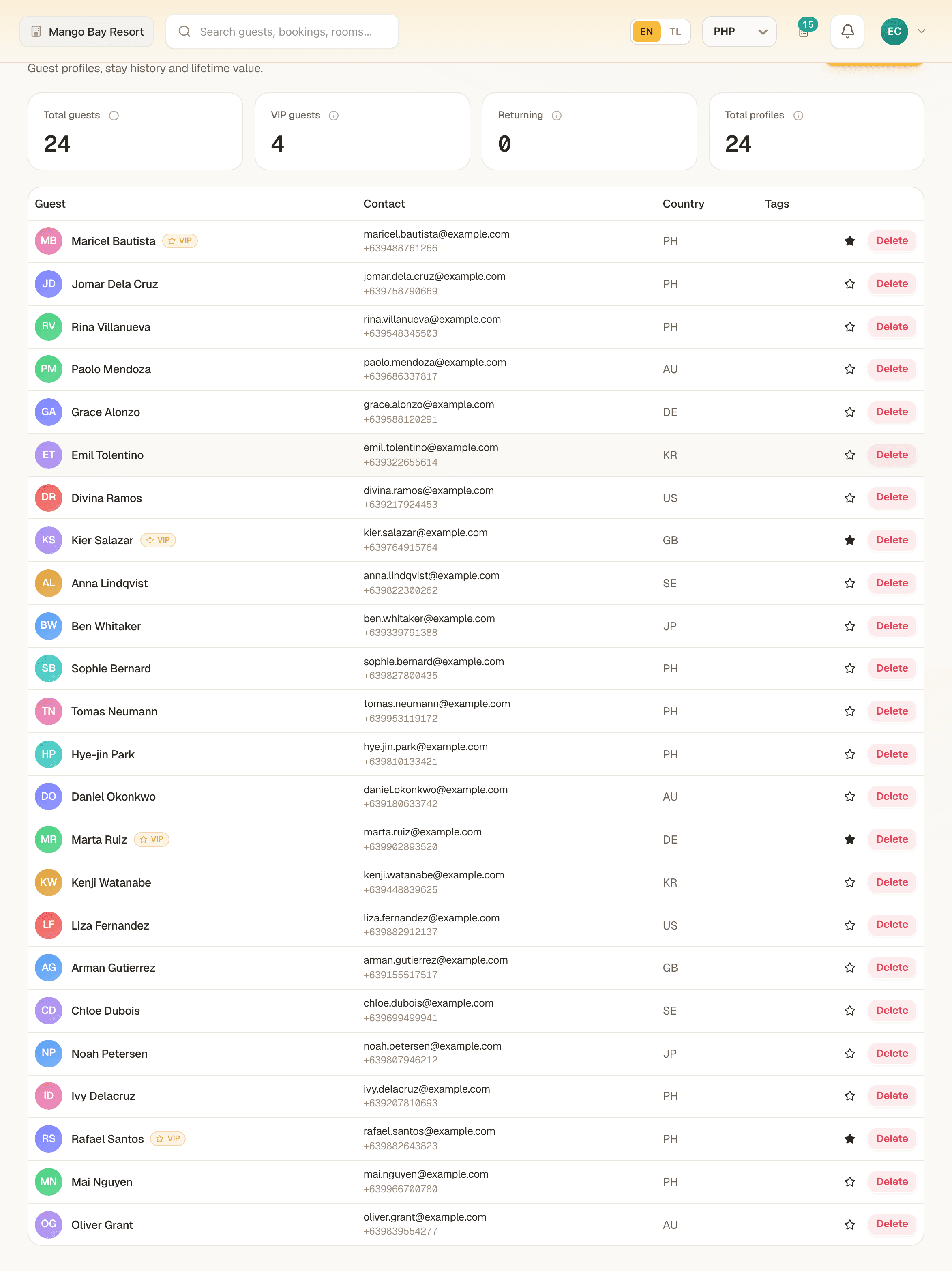
A guest who has stayed four times and a guest who has never been are the same person to most hotel software: a name on a booking. So the fourth-time guest gets asked for their details again, and nobody at the desk knows they always ask for a late checkout.
For a property whose best channel is people coming back, that is the most expensive thing the software does.
Guest CRM is one of the modules included in the MangoHost platform — every plan has all of them, so nothing on this page is an upsell.
The workflow
How it works
A profile, not a booking field
Name, email, phone and country, held once and reused. Stay history sits on the profile, so the person at the desk can see this is a return visit without asking.
Lifetime value, and who is actually loyal
Each profile carries what the guest has been worth across their stays, and the list tells you how many of your guests are returning rather than new.
That returning-guest number is the one that justifies every direct-booking decision you make, and almost nobody at this size has it.
VIP, where it will actually be seen
A VIP flag is not a note in a file. It shows on the guest's profile, beside their message thread in the inbox, and on the housekeeping card for their room — so the people who need to know are told without being briefed.
Tags carry the rest: dive group, agent booking, allergy, honeymoon.
Where the profile shows up
A profile is only worth keeping if it appears where the work happens. This one shows beside the guest's message thread in the inbox, on the housekeeping card for their room, and on the booking itself.
So the person who needs to know that this is a fourth visit is told, without anyone briefing them and without opening a second screen.
Country, and why it is on the list
Guest country sounds like a vanity field until you look at a Philippine property's mix. Korean, Chinese and Japanese guests behave differently from Australian and German ones — different lead times, different length of stay, different expectations about breakfast and about being spoken to in their own language.
It is also what tells you whether adding a language to your Guest Guide would pay for itself.
Guest data, treated as guest data
Names, emails and phone numbers are personal data under the Philippine Data Privacy Act, and the system treats them that way: scoped to your property, reachable only by the roles you grant, and recorded in the audit log when they change.
Guest guides — the one guest-facing surface — are served noindex, so nothing about a stay is search-engine material.
In detail
| Guest profiles | Name, email, phone, country, notes. |
|---|---|
| Stay history | Past and upcoming stays on the profile. |
| Lifetime value | What the guest has been worth across stays. |
| VIP flag | Surfaced in the inbox and on the housekeeping board. |
| Tags | Free-form, for anything your property needs to remember. |
| Stats | Total guests, VIP count, returning guests. |
Who this is for
Your best channel is people coming back
Then the returning-guest rate is your most important number, and this is where it comes from.
You have guests who expect to be known
VIP and tags put that knowledge in front of whoever is on shift, not just whoever has been there longest.
See it on your own property
Thirty minutes with the IslandLink team, your rooms and your rates. No card, nothing to sign.