Solution by property
One system for the rooms and the restaurant
Two businesses under one roof should not need two systems and three spreadsheets.
The room-charge loop, closed
One store, two sides of the business
Rooms and F&B, judged separately and then together
Why this property shape needs a different answer
Almost every Philippine resort of any size has a kitchen attached, and almost none of them runs it in the same system as the rooms. The restaurant gets its own tally sheet, its own stock count when somebody remembers, and guest meals on a slip that reaches the front desk before check-out — or does not.
That arrangement fails in two directions at once. Stock leaks, because nobody can separate what should have been used from what is simply gone. And the property's profit figure is wrong, because a large share of its revenue and most of its waste live outside the books it is calculated from.
The room-charge loop, closed
A guest orders lunch. The bill is attached to their stay, settled to the room, and clears at check-out with everything else they owe. No slip, no cash at the table, no chasing.
The guard is the part that makes it safe: a bill with no attached stay is refused for room settlement rather than posted somewhere unclear. This is also the one thing a standalone restaurant POS structurally cannot do for you, however good it is at taking orders.
One store, two sides of the business
Stock categories carry an area — hotel, restaurant, bar — so the housekeeping store and the kitchen store are separate lists rather than one long scroll, while sitting in the same ledger.
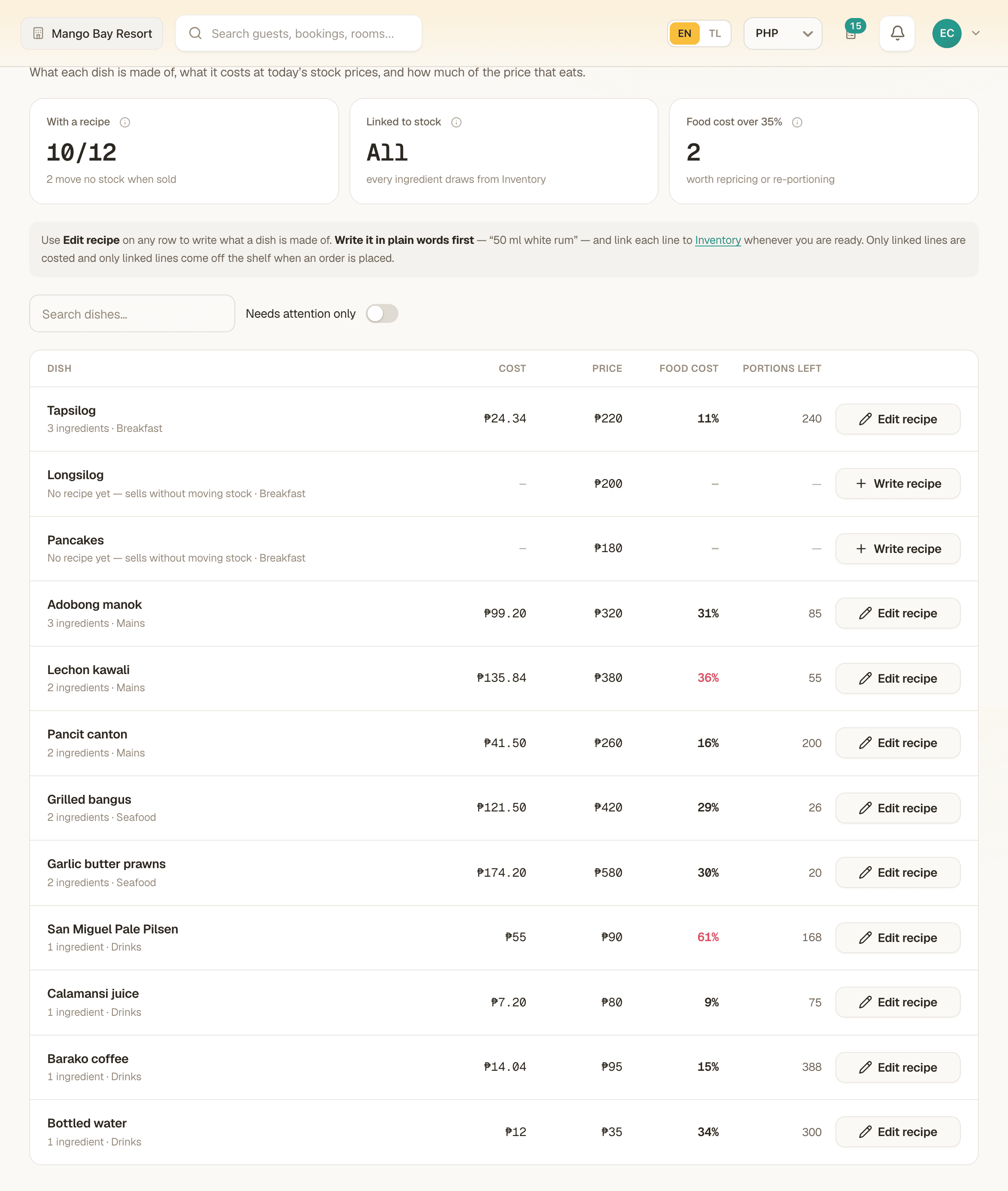
That matters because the same ledger is what recipes draw from. Selling a dish takes its ingredients out at the moment the order is placed; voiding the bill puts them back, computed from the movements the order actually wrote rather than by re-reading a recipe that may have changed since.
Rooms and F&B, judged separately and then together
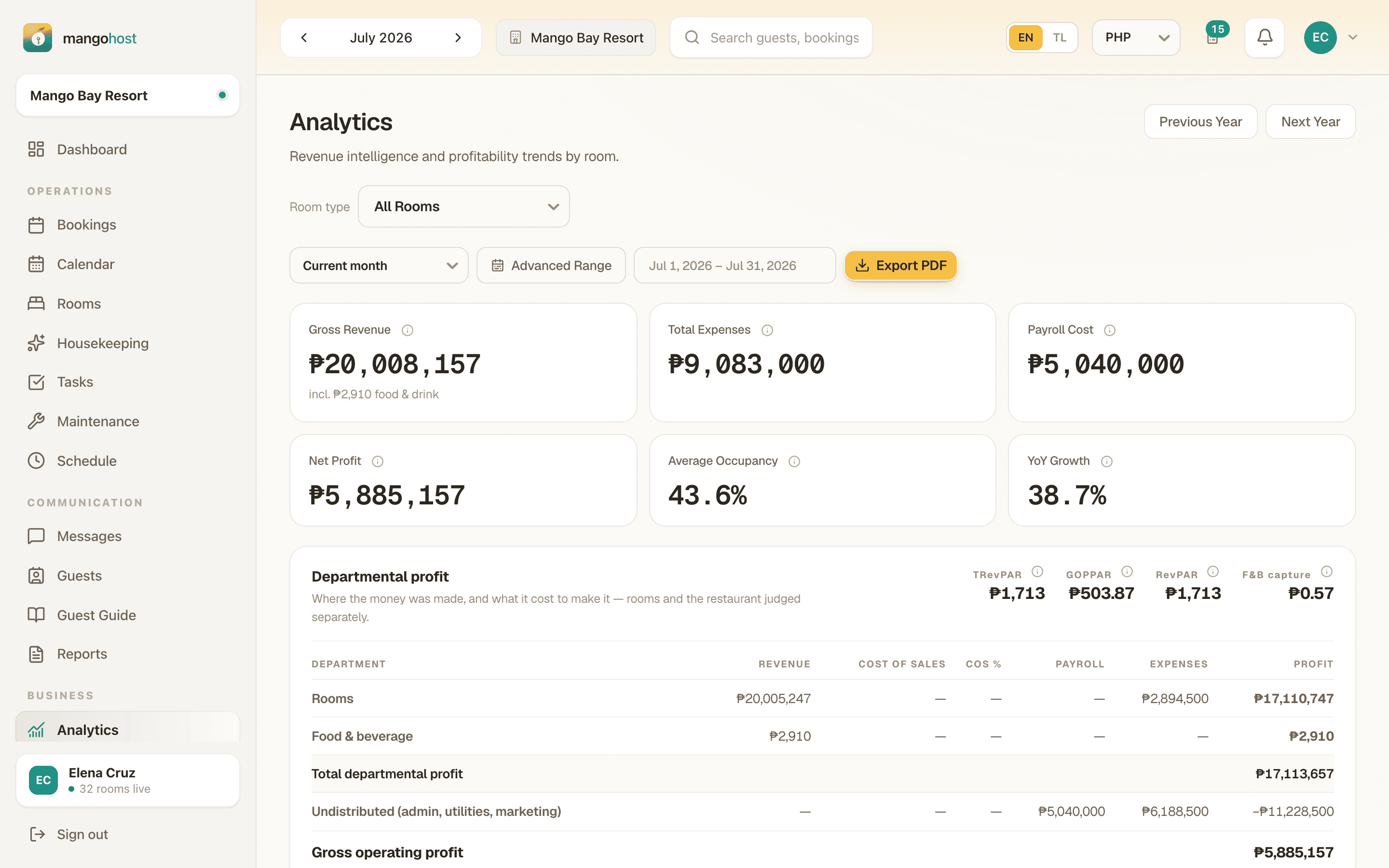
The profit statement splits by department: revenue, cost of sales, payroll and expenses for the rooms, the same for food and beverage, each with its own profit line, then the undistributed costs — admin, utilities, marketing — and a consolidated gross operating profit.
Cost of sales for the kitchen comes from the stock ledger rather than from a guess, which is what makes an F&B food-cost percentage a real number here. Inventory purchases are excluded from ordinary expenses while that ledger is active, so nothing is counted twice.
Above the table sit the two ratios that let you compare yourself to a real hotel rather than to last month: TRevPAR — total revenue per available room, F&B included — and GOPPAR.
A waiter is not a manager
The restaurant is the one module granted screen by screen, because a waiter and a cook need one screen each. A cook gets the kitchen queue; a waiter gets Orders; neither gets the menu prices, the recipe book or the till.
That is not a nicety on a wall-mounted kitchen display. A screen that hangs in a service area all evening should not have your food costs on it.
Worth knowing before the demo
It is F&B for hotels, not a full POS
Splitting one bill across several payments, menu modifiers and variants, and a cashier shift session with X- and Z-readings are genuinely absent. Senior citizen and PWD discounts and VAT decomposition are computed correctly — but MangoHost itself is not BIR-accredited as a point-of-sale system, and a printed bill says so unless your property holds its own Permit to Use. If any of that is a deal-breaker, we would rather you knew before the demo than during it.
Your property, not a generic demo account
See it on your own operation
Thirty minutes with the IslandLink team, your rooms and your rates. No card, nothing to sign — and we will tell you honestly if we are the wrong fit.