Solution by role
The numbers you act on today, not the ones you explain next month
Department-level profit, a task board your team actually clears, and shift reports that turn into a record rather than an inbox.
Rooms and F&B, judged separately, every week
A task board your team can actually clear
Maintenance that does not disappear into a notebook
What this role needs to know and act on
An owner reads a monthly PDF. A general manager is on the property, deciding on Tuesday whether the restaurant's food cost is a blip or a pattern, whether the housekeeping team is behind because of a bad week or because there are not enough people, and which of six open maintenance jobs actually needs to happen before Friday's check-ins.
Those are operating decisions, and they need this week's numbers, not last month's — and a way to see what the team is actually doing, not just what they say they did.
Rooms and F&B, judged separately, every week
The profit statement splits by department — revenue, cost of sales, payroll and expenses for rooms, the same again for food and beverage — rather than one blended figure that hides which side of the business is actually working. A rooms department having a strong month can cover for a restaurant quietly losing money, and a blended number would never tell you.
Food cost of sales comes from the stock ledger itself, not an estimate, so a spike is visible the week it happens rather than the month you reconcile the freezer.
A task board your team can actually clear
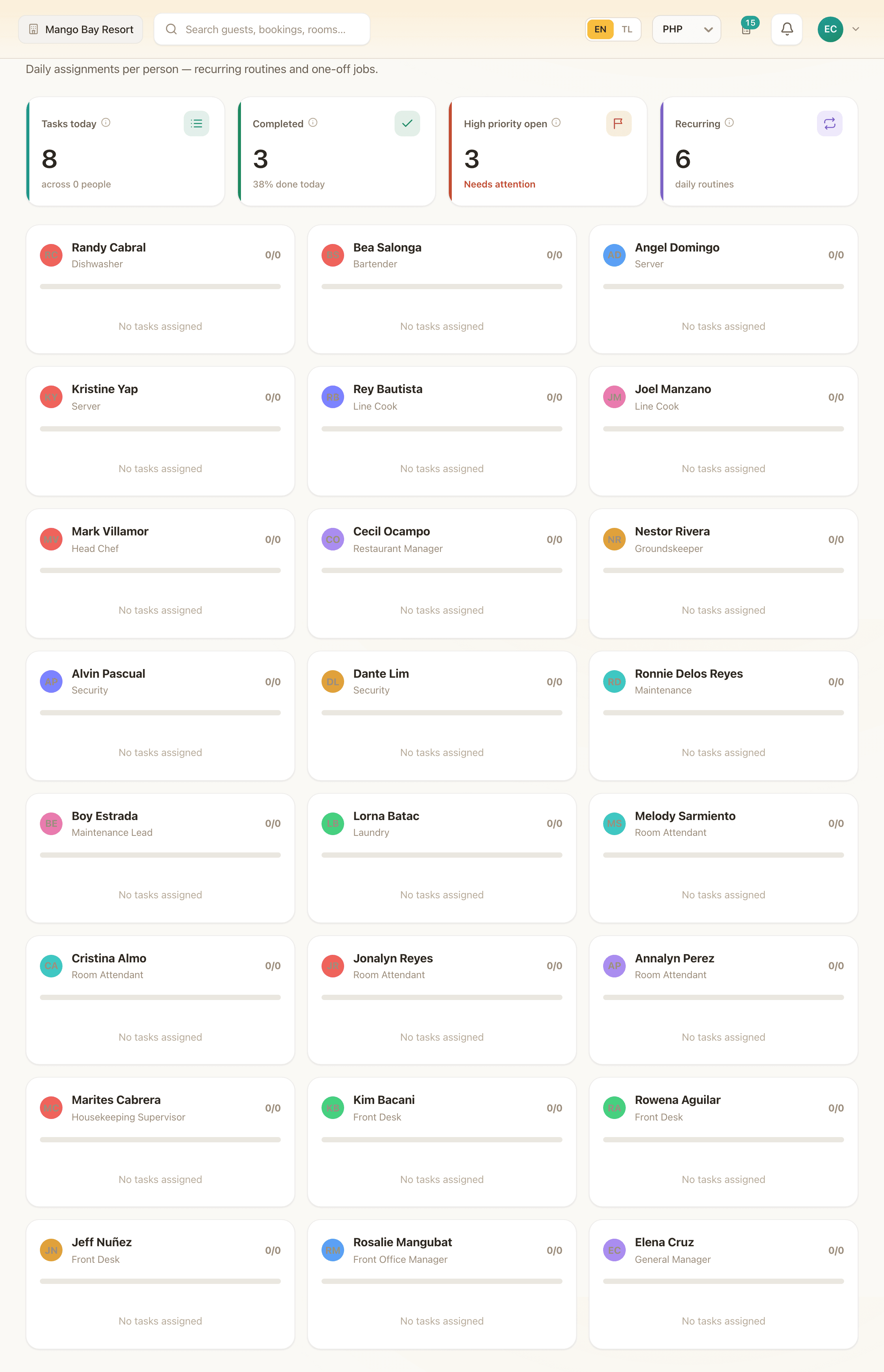
Daily assignments grouped by person, recurring routines and one-off jobs, all in one board — not a rota that lists names against times and hopes the work matches. You can see what is assigned, what is done, and who is carrying more than their share before it becomes a pattern nobody flags.
Maintenance that does not disappear into a notebook
Work orders move through a kanban board by priority and trade — open, in progress, resolved — instead of living in whoever remembered to write it down. A guest complaint about the air conditioning becomes a ticket with an owner and a status, not a promise that gets forgotten in a busy week.
Shift reports that add up to something
Each shift closes with hours, rooms handled, tasks completed against tasks assigned, and any issues flagged — filed by the person who worked it, reviewed and approved by you. Over a season those roll up per person, which is the first real performance record most small properties have that is not someone's impression.
The day, before the day is over
Arrivals, departures and who is in house, with the month's occupancy and revenue above them, updating as bookings land. A problem visible in week two of the month is a problem you can still fix; the same problem read in a report in week five is a postmortem.
Your property, not a generic demo account
See it on your own operation
Thirty minutes with the IslandLink team, your rooms and your rates. No card, nothing to sign — and we will tell you honestly if we are the wrong fit.